
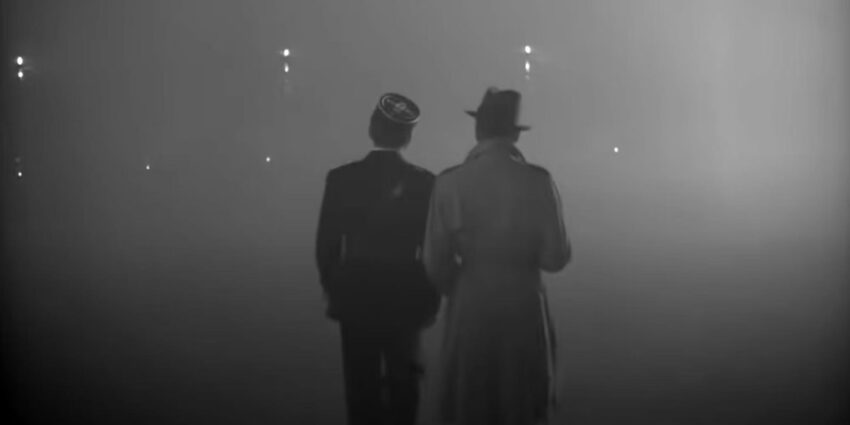
I’ve never watched Casablanca but that iconic last line, “this is the beginning of a beautiful friendship,” seems apt for the title of a blog post about my new tentative association with AI as a technical writer. Sort of.
I mean, “beautiful” may be pushing it a bit, but we’ll see.
I was not an early adopter. While other tech comm folks have been posting about their AI-powered workflows the past couple of years, I was quietly skeptical — watching, waiting, and frankly a little resistant. I don’t like “big tech” right now, but that’s beyond the scope of this post.
I couldn’t use AI within my job anyway until this year. My employer took a sensible approach and waited for the technology to mature before diving in.
Now we have a subscription to an LLM, and I’ve been using it.
I didn’t start with writing assistance, however. Technical writers often carry tasks that are invisible to the outside world: mapping content to product versions, auditing doc sets for consistency, identifying patterns across support tickets, structuring logic for automated workflows. Left-brain work. Methodical, necessary, and — if I’m being honest — tedious in ways that have nothing to do with craft.
Also, I’m not just a writer, I’m a content manager. I built and maintain a help website that I am constantly working to improve for our users.
So I gave our AI tool one of those left-brain, background, invisible tasks. I set up an automated logging process to support a new interactive feedback feature I implemented on our help website.
The process checks for user submissions at specified intervals and loads the responses automatically into columns in a spreadsheet (“date,” “comments,” “status,” “page URL,” etc.). A second tab in the document is set up to track the responses, quantify them, and allow for running reports.
Although I know a little bit of coding and scripting, I could not have set this up 100% on my own. Still, I did most of the legwork — I designed the prompts to get the exact information I needed, implemented the process on the front and back end, and tested it out.
The tool handled it well and the end result was a success. I was reluctantly pleased.
That’s not a conversion experience. But it was enough to keep going.
None of this has resolved my skepticism. It still feels like early days to me. The technology is moving sometimes too fast, the use cases are still being figured out, and anyone who tells you they have it fully mapped out is probably overselling. I don’t know yet what the long-term shape of this looks like for technical writers. But I do know that avoiding it isn’t really an option anymore.
So, “beautiful” friendship? I’m not there yet. I’m at the part of the film before that — where the two characters are still sizing each other up, not entirely sure whose side the other is on.